


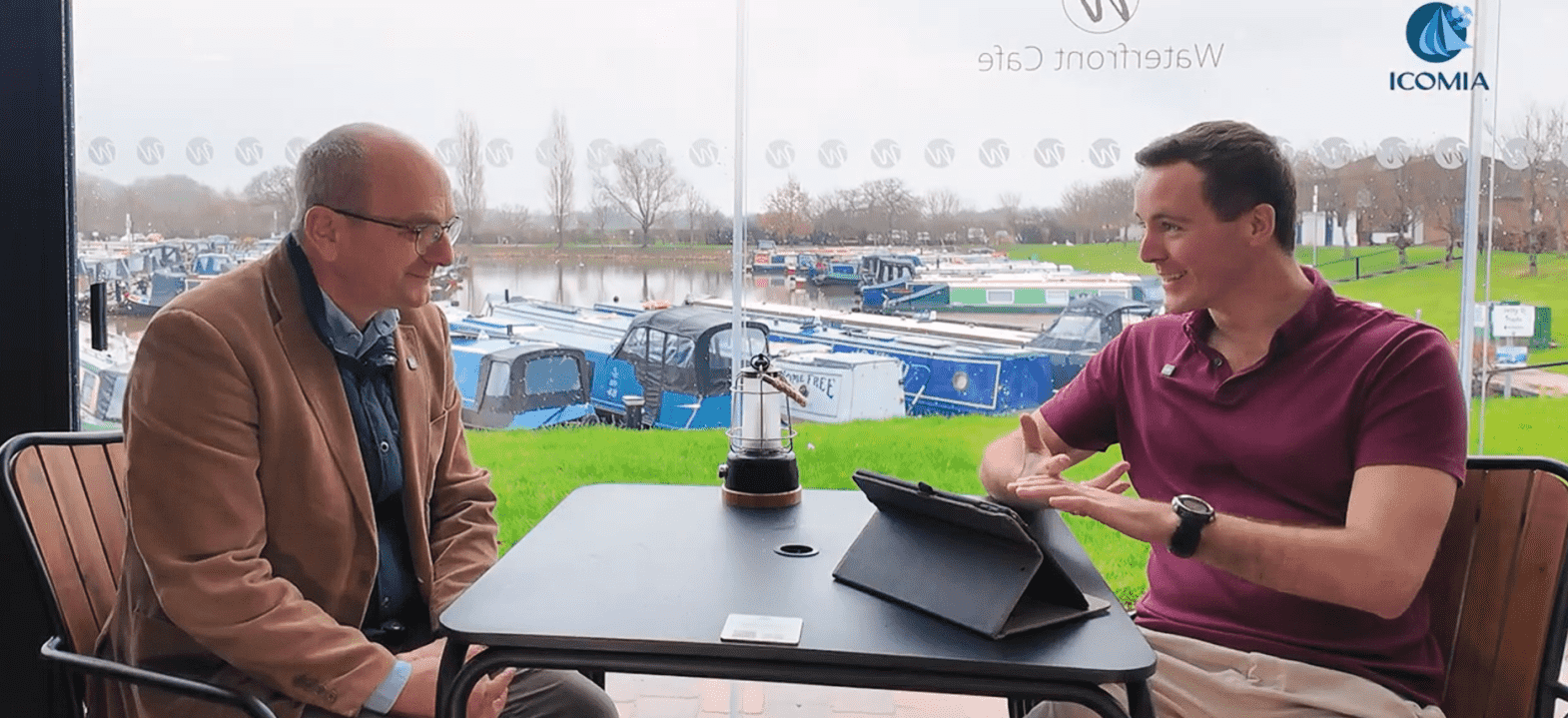
In this episode of the ICOMIA podcast, sponsered by EliteMarinas, host Ben Taylor sits down with Robert Parton, owner of Aqueduct Marina and President of British Marine. Their conversation explores how the inland boating sector has evolved in recent years, from changing customer expectations to the growing pressures facing the UK’s canal industry and infrastructure.
From Marina Start Up to One Stop Shop
Aqueduct Marina first opened in 2009 with a clear but relatively simple business model. The 150 berth marina was developed with workshop units and a café that would initially be leased to external tenants, while a small internal team focused on operating the marina itself.
However, after three years it became clear that this model was not delivering the level of service the business wanted to provide. Rather than relying on tenants to operate key services, Robert and his team decided to bring those operations in house. The marina took over running the café and reclaimed the workshop units once the original leases came to an end.
This decision allowed Aqueduct Marina to develop a far more integrated business. Today the marina operates as a comprehensive one stop shop for canal boat owners, offering brokerage, servicing, parts and repairs all in one place. Instead of coordinating multiple suppliers or travelling between locations, boat owners can bring their vessel to Aqueduct Marina and have everything taken care of by one team.
The Growing Demand for Professional Repairs
One of the most notable developments has been the rapid growth of the repair and maintenance side of the business. According to Robert, this area now represents roughly two thirds of Aqueduct Marina’s overall activity.
Demand for professional services has increased significantly in recent years, reflecting a broader shift in the canal boating customer base. Previous generations of boat owners were often very hands on, taking their boats out of the water and carrying out repairs and maintenance themselves.
Today’s customers often have different expectations. Many prefer the convenience of having work carried out for them, relying on specialist expertise to keep their boats in good condition. Aqueduct Marina has adapted to this change by expanding its services and ensuring that boat owners can access everything they need in one place.

Expanding the Marina Experience
Looking ahead, Aqueduct Marina is continuing to evolve. The next phase of development includes the addition of 29 lodges, building on the marina’s existing campsite facilities.
This expansion is designed to enhance the overall visitor experience while also diversifying the business. Guests will be able to stay on site and enjoy the surrounding waterways while benefiting from the services available at the marina.
The location is well suited to this type of development. Aqueduct Marina sits in a peaceful rural setting while remaining within easy reach of several major cities. The new lodges will allow visitors to enjoy time on the water while staying close to urban centres, creating a balance between accessibility and tranquillity.
The Canal Industry Network and the Challenge of Funding
Alongside running Aqueduct Marina, Robert also serves as President of British Marine, the trade association representing the UK’s leisure marine industry. The organisation is made up of several specialist associations that represent different sectors, from marinas and inland waterways to boat builders and marine service providers.
During the podcast, Robert and Ben discuss the wider economic challenges facing the inland waterways network. Over the past two decades the canal system has faced increasing pressure, particularly when it comes to funding and infrastructure maintenance.
The situation became more concerning following the government’s announcement that funding for the network will be cut significantly. When an infrastructure system is already under strain, reducing funding can accelerate the decline. As Robert describes it, the risk becomes a gradual deterioration through what he calls “death by a thousand cuts”.
Closures within the canal network can have an immediate impact because there is often no alternative route. If a section of waterway becomes unusable, boaters and businesses may have no way around it.
Protecting the Future of Canal Boating
The resilience of the network is also being tested by wider environmental factors, including flooding and drought linked to climate change. These pressures further highlight the importance of long term investment in maintaining the infrastructure.
Despite these challenges, interest in canal boating remains strong. The UK’s historic waterways continue to attract enthusiasts from across the country and around the world. International visitors often travel specifically to experience canal boating, and many choose to keep their boats in the UK.
This demand highlights the opportunity within the sector. Canal boating supports tourism, local businesses and employment across many regions. Marinas like Aqueduct invest in their facilities and contribute to local economies, creating what Ben describes as a micro economy around the waterways.
For organisations such as British Marine, continuing to raise awareness of the importance of maintaining the canal network is a key priority. Protecting this infrastructure is not only about preserving heritage but also about supporting a thriving industry with significant economic and tourism potential.
To hear the full conversation, tune into the ICOMIA podcast and discover more about the future of the UK canal industry. As proud sponsors of the podcast, EliteMarinas support marinas across the UK with innovative management software, helping them deliver excellent service to their customers.